
Fluctuations in Motivation: A Neurocognitive Perspective
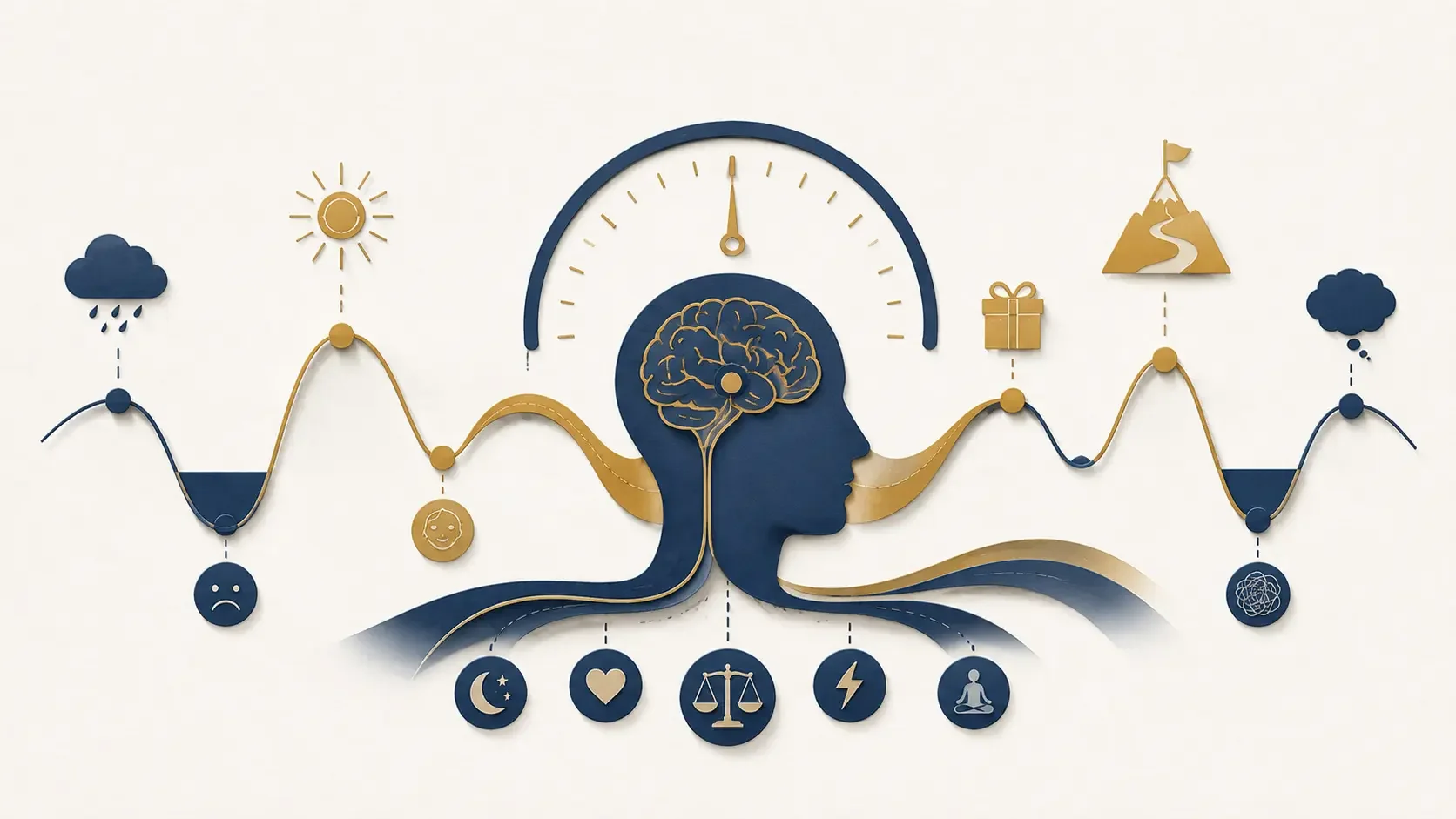
Motivation is often described as if it is a fixed personality trait. Some people are described as motivated, while others are seen as lazy, unfocused, or inconsistent. But when it comes to the reality, the brain is a bit different.
Motivation is not a switch that you can turn it on or off. It is much closer to state that changes by reward, expectation, mood, energy, stress, memory, and the cost of action. On some days, the same task feels manageable, other days, it may feel heavy though nothing obvious has changed. This variability has caused a lot of misunderstandings.
Why motivation is not stable?
Firstly, we should understand that motivation is not only about wanting something, it’s also about whether your brain can calculate, manage and organise movement to execute it. Which means it depends on several questions that have to be answered by the brain at once.
This means motivation depends on several questions being answered at once. Is this worth doing? Is the reward clear enough? Is the effort manageable? Do I expect success or failure? Do I have enough mental energy to start? Is the emotional cost too high? These questions, most of the times, are quietly running in the background. That is why someone can care deeply about a goal and strongly wanting to do something about it but still struggle to act.
This is especially important in mental health. In depression, motivation may fall because reward feels distant or absent, effort feels too high, and the future no longer carries the same sense of importance. In ADHD, motivation may become more dependent on immediacy, interest, urgency, or novelty. In anxiety, motivation may be redirected towards avoiding threat rather than moving towards growth.
So, when motivation fluctuates, it does not always mean the person has changed their values. It may mean the brain’s estimate of reward and effort has changed.
The role of reward and expectation
Motivation is closely linked to the brain’s reward system, but reward does not simply mean pleasure.
The reward system helps the brain learn what matters. It predicts what may be valuable, and decides whether something is worth pursuing. The importance of Dopamine is crucial here. Dopamine helps the brain with learning through wanting, efforts and expectations. That’s why its incorrect to reduced Dopamine to a simple ‘pleasure chemical’.
If the brain expects that an action will lead to a meaningful reward, then motivation becomes easier to access. Contrary, if the reward is uncertain, far away, or too small, motivation can drop. This is why a task can feel easy when the result is immediate, but almost impossible when the reward is abstract or distant.
For example, replying to a message from someone you like may feel easy because the reward is immediate and emotionally appealing. But completing a long administrative task may feel much harder because the reward is delayed, uncertain, or simply the relief of having it finished. It worth mentioning here, that the brain is not always impressed by the promise of future relief. It often behaves like impatient child, and controlling this child is more difficult in the presence of metal illnesses.
This also explains why expectation can change effort. If someone expects failure, criticism, boredom, or emotional exhaustion (i.e. low or no reward), the brain may reduce drive before the task even begins. It is not always a lack of desire, sometimes it is a prediction and calulations.
Emotional states and motivation
Motivation is highly shaped by and closely connected with emotion. When we feel calm, hopeful, interested, or socially supported, action may feel more available. When we feel anxious, ashamed, sad, overwhelmed, or threatened, the same action may feel much harder. Emotional states can change what the brain notices, what it prioritises, and how much effort feels reasonable.
A person who feels anxious may be highly motivated, but the motivation may be directed towards reducing threat. That could mean avoiding a meeting, delaying an email, checking repeatedly, or trying to prevent a mistake. From the outside, it may look like procrastination. From the inside, it may feel like danger management.
A person who feels depressed may not only enjoy things less, but may also find it harder to feel pulled towards them. The goal still matters, but it no longer carries enough emotional force to move the person into action.
This is why telling someone to ‘just be motivated’ rarely helps. It is like telling a cold cup of tea to become hot again through personal discipline. Its true that you provide a clear instruction, but without understanding the mechanism. Potentially worsening the condition through emotional overload and feeling guilt.
When motivation disappears without warning
One of the most frustrating experiences is when motivation disappears suddenly.
You may wake up with good intentions and a clear a plan, only to sit down and feel the drive vanish. This can be often confusing, especially when the task is important.
There are several possible reasons for this. Sometimes the reward becomes less clear once the person gets close to the task. Sometimes the effort becomes more visible. Sometimes the first step is too vague. Sometimes emotional memory enters the picture, a previous experience of failure, criticism, pressure, or shame quietly changes the brain’s response to the task.
This can happen even when the person is intelligent and capable. In fact, people who are very reflective may notice the gap more sharply because they can see exactly what needs to be done. The difficulty is usually the action rather than lack of an insight.
This distinction is critically important in managing motivation. Just because you know it, doesn’t mean you can easily execute it. Just because you can’t move, doesn’t mean you don’t care. Understanding the importance of a task does not automatically motivate the brain and treat it as safe, rewarding, or manageable.
Understanding variability in drive
Variability in motivation is often treated as a personal weakness. But, a more accurate view is that motivation is affected by context. Sleep, stress, mood, hormones, attention, physical health, social pressure, previous outcomes, and the clarity of the reward can all change how much Motivation is available. Just to be clear, this does not mean responsibility disappears. But the responsibility has to be built on a realistic understanding of how the brain works.
For many people, the solution is not to wait for motivation to become perfectly stable. It rarely does. The more useful approach is to design conditions that reduce friction and make action easier to begin. This can include making the first step smaller, making the reward more visible, reducing unnecessary decisions, using routines, working with another person, changing the environment, or placing the task at a time of day when mental energy is stronger.
Motivation often follows action rather than preceding it. A person may not feel ready at the beginning, but once movement starts, the brain receives new information that this is possible, and this is not as threatening as expected.
Why this matter
Motivation is not simply a matter of character.
It is a changing brain state shaped by reward, expectation, emotion, energy, and context. Sometimes the brain moves easily towards action. At other times, it hesitates, withdraws, or recalculates the cost. This does not mean people are powerless. It means that action often improves when we understand the conditions that make motivation more likely.
A more useful question is not always: ‘Why am I not motivated?’
Sometimes the better question is: ‘What is my brain predicting about this task?’
That question gives us a more precise way forward. It turns motivation from a moral test into something we can understand, support, and shape.
A clinical note
Fluctuations in motivation can happen in ordinary life. They can also be more pronounced in mental health conditions such as depression, ADHD, anxiety, trauma-related difficulties, and burnout.
This article is not a diagnostic guide. Low or unstable motivation can have many causes, including mood, sleep, medications, physical health, stress, grief, and environmental demands. If a change in motivation is persistent, severe, or affecting daily functioning, it is worth discussing it with a qualified healthcare professional.
The key point is not to turn every variation in motivation into a diagnosis. It is to move away from moral judgement and towards better understanding.
Read more in The Decode Journal or explore related ideas in Stuck, Not Lazy.
Further reading
This article is informed by research in neuroscience, psychiatry, motivation, reward processing, and effort-based decision-making. For readers who would like to explore the subject further, the following sources may be helpful:
The Neurobiology of Activational Aspects of Motivation: Exertion of Effort, Effort-Based Decision Making, and the Role of Dopamine
https://www.annualreviews.org/content/journals/10.1146/annurev-psych-020223-012208Evolving Concepts of Emotion and Motivation
https://www.frontiersin.org/journals/psychology/articles/10.3389/fpsyg.2018.01647/fullPrediction Error: The Expanding Role of Dopamine
https://elifesciences.org/articles/15963Effort-Based Decision-Making in Major Depressive Disorder
https://pmc.ncbi.nlm.nih.gov/articles/PMC3730492/Dopamine and Effort-Based Decision Making
https://pmc.ncbi.nlm.nih.gov/articles/PMC3122071/Relationships Among Cognition, Emotion, and Motivation
https://pmc.ncbi.nlm.nih.gov/articles/PMC3678097/Dopamine Reward Prediction Error Coding
https://pmc.ncbi.nlm.nih.gov/articles/PMC4826767/
Note: Some concepts in this article are simplified to make the science easier to understand without changing the main message.
